By: Robert Bruce
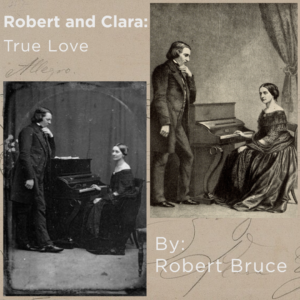
On September 12, 1840, just a day before her twenty-first birthday, pianist Clara Wieck was married to her longtime beau, the thirty-year old composer, Robert Schumann. The two had met in Leipzig when Robert began studying piano with Clara’s father, Friederick Wieck, a well-known professional pianist and teacher. Over the course of several years, Robert and Clara became increasingly attached, and in 1837, Robert proposed to her, and she accepted. But when Robert asked Friederick for his daughter’s hand in marriage, he absolutely refused permission. Although already a successfully published composer of piano works, and with his daughter already established as a concert pianist, Wieck strongly objected to their union, fearing the worst for both their futures.
In desperation, Robert and Clara took their case to court, suing Wieck for their ability to wed. After a long and acrimonious legal battle, the judge ruled in favor of the young couple, and the two were finally married. In joy over being able to marry the girl he loved, 1840 proved to be Schumann’s “year of song,” writing at least 138 songs that year. Their partnership proved to be a happy and fruitful one, with Schumann composing his piano concerto, four symphonies, chamber works, and much vocal, choral, and piano music; while Clara pursued a successful career as a concert pianist, championing her husband’s music, and proving to be an accomplished composer herself.