|
Written by Robert Bruce
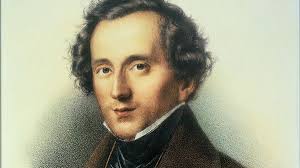
February 3 is the birthday of the early Romantic composer born Jakob Ludwig Felix Mendelssohn Bartholdy in 1809. A child prodigy, Mendelssohn matured at a very young age and went about producing musical masterworks in many genres for the rest of his life. He wrote the masterful Octet for strings in E-flat and the amazing Overture to A Midsummer Night’s Dream while still in his teens, adding the incidental music for Shakespeare’s play seventeen years later, in 1843. In addition to being one of the most renowned composers of the day, Mendelssohn also performed as a pianist, organist, and conductor in many cities, including Vienna, Rome, Leipzig, Berlin, and London. He made ten separate visits to Great Britain, where he made a huge impression and developed a strong following. A visit to Scotland inspired two of his most famous works: The Hebrides Overture and the Symphony in A minor, known as the “Scottish.”
Mendelssohn was the first conductor to dispense with the practice of breaking up symphonies and concertos with short pieces by minor composers played between movements. Having memorized the scores of all nine Beethoven symphonies as a child, Mendelssohn was responsible for reviving interest in the music of Johann Sebastian Bach when he led the first performance since Bach’s lifetime of the Saint Matthew Passion in 1829. Happily married, enormously successful and well-liked, Mendelssohn seemed to lead a charmed life, marred only by his early death in 1847. Already in ill-health, news of the death of his beloved sister Fanny caused a collapse from which he never recovered, dying six months later. And yet, in a letter, Mendelssohn had once described death as a place “where it is to be hoped there is still music, but no more sorrow or partings.” |