The Spanish Zarzuela
The Spanish Zarzuela

 The Spanish Zarzuela
By Faith Rhode
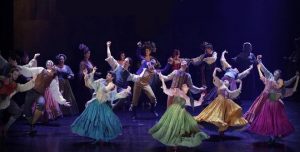
Like many countries, Spain has its own form of opera which incorporated songs and theatrics. In the 17th century, the Zarzuela Palace in Madrid hosted large parties for the royal court, employing local artists. These parties became extravagant, leading to the popularity of entertainment through song and acting. It’s here that zarzuela, Spanish opera, emerged.
The plots of these operas ranged from mythical Greek and Roman tales to everyday life in Madrid. The first known playwright was Pedro Calderón de la Barca who collaborated with composer Juan Hidalgo de Polanco in 1657 to create the first zarzuela, El Laurel de Apolo. In the 1700s, zarzuela fell out of fashion thanks to the Bourbon dynasty which favored Italian opera. Zarzuela was not popular again until about 1786 when Italian composer Luigi Boccherini wrote La Clementina for the Spanish lyric theatre.
In the late 19th century, Spain was suffering a deep economic crisis. Many theatres closed since the majority of the population could no longer afford to see grandiose operas. Single-act zarzuela, or género chico, became popular with the working-class because of their affordability. La Gran Vía, composed by Federico Chueca and Joaquín Valverde Durán in 1886, became a popular género chico in Spain and Europe. Zarzuela Grande, or género grande are larger three- or four-act operas that were enjoyed by the upper class. Francisco Asenjo Barbier, a well-established and highly respected composer, wrote what has become probably the most popular género grande, El barberillo de Lavapiés in 1874.
Zarzuela eventually became widespread in Catalonia, Mexico, Cuba, and even the Philippines, where each country’s own traditions were imposed on the original Spanish Zarzuela.