Wagner’s “Ring” – With and Without Words
Wagner’s “Ring” – With and Without Words

 Wagner’s “Ring” – With and Without Words
By Robert Bruce
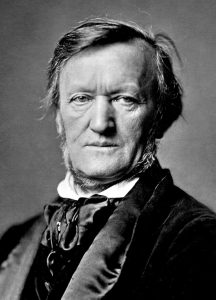
Richard Wagner (1813-1883) was one of the most influential composers of the late 19th century. Although he had little formal musical training (learning his art mostly through studying scores and later by conducting opera), Wagner’s theories about the future of German opera – including music, subject matter, poetry, acting and production – initiated vigorous debate in musical circles during his lifetime, generating both supporters and detractors. His increased but refined use of a greatly augmented orchestra, expanded use of chromatic harmony, and the extension of thematic and motivic development in his mature scores, have resulted in his being regarded as one of the outstanding composers in the history of music.
Of all his works, by far the most ambitious in concept, scope, and achievement is his four-opera cycle Der Ring des Nibelungen (The Nibelung’s Ring), popularly referred to as “The Ring.” Basing his texts on Nordic, Germanic and Icelandic mythological sagas, Wagner constructed his own epic story dealing with themes of power, love, sacrifice and redemption, involving gods, Nibelungs (dwarfs), giants, river nymphs, Valkyries, a dragon, and mortal men and women. The four parts, Das Rheingold (The Rhinegold), Die Walküre (The Valkyrie), Siegfried, and Götterdämmerung (Twilight of the Gods), are meant to be performed on four consecutive evenings, and a complete performance lasts some fifteen hours.
Binding the dramas together is Wagner’s incredible and sumptuous music, incorporating his extensive use of Leitmotiv (“leading motive”): expressive themes and phrases representing characters, objects, ideas, and events. These themes, sometimes extensive, sometimes simply chordal, form the basis of the scores, with Wagner introducing them at crucial moments in the action, then continually combining and developing them as the drama progresses, resulting in an uninterrupted flow of symphonically conceived music.
Wieland Wagner, the composer’s grandson who directed many outstanding post-WWII productions of the operas at Wagner’s theater in Bayreuth, once said “The Orchestra – that’s where it all is – the text behind the text, the universal subconscious that binds Wagner’s characters one to the other and to the relevant themes of the proto-myth.” Wagner himself could not imagine the text stripped of the music, and this is why many purely orchestral moments from “The Ring” have found their way into the concert hall, including “The Ride of the Valkyries,” “Forest Murmurs,” “Wotan’s Farewell and Magic Fire Music,” “Siegfried’s Funeral Music,” and “Entrance of the Gods into Valhalla.”
In recent years, several arrangements of these excerpts have been made condensing Wagner’s immense work into huge “symphonic poems,” including one by Dutch percussionist and arranger Henk de Vlieger. Beginning with the first notes of Das Rheingold and ending with the final bars of Götterdämmerung, his “orchestral adventure” is a one-movement musical “synopsis” of Wagner’s epic drama, incorporating many of the orchestral highlights from the operas in sequential order. You can hear “The Ring Without Words” performed live by the Colorado Springs Philharmonic on April 29 and 30, with a broadcast on KCME on Sunday, May 14.