Stravinsky and his Rite
Stravinsky and his Rite

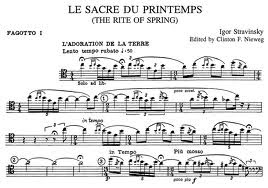
One of the most important June birthdays in Classical Music belongs to Igor Stravinsky, who was born near St. Petersburg on June 17th, 1882. He would go on to become one of the most significant composers of the 20th century and was especially notable for his pioneering work in a wide variety of musical styles, ranging from Late Romanticism all the way to Serialism. Although his experimentation with novel art forms very often led to mixed reactions from the public, the most remarkable and infamous episode in Stravinsky’s long career surrounded the premiere of his ballet The Rite of Spring.
Fresh off the smashing success of his ballet The Firebird in the Ballets Russes’ 1910 Paris season, Stravinsky began plans for a new ballet depicting a pagan ritual sacrifice. The legendary dancer Vaslav Nijinsky provided the choreography for the work, and the sets and costumes were designed by Nicholas Roerich, who was considered an expert on Russia’s ancient pagan history. Although some members of the orchestra complained about the controversial nature of the music during rehearsals, The Rite of Spring was nonetheless presented to the public for the first time on May 29th, 1913.
Over 1,900 people eagerly attended the premiere at the newly-constructed Théâtre des Champs-Élysées in Paris. However, after the orchestra played the very first notes of the Introduction, mocking laughter began to be heard from the audience. When the curtain rose and revealed the dancers performing Nijinsky’s savage, shocking choreography, the unrest in the hall turned into an uproar. Members of the audience began throwing things at the orchestra, and eventually the clamor became so deafening that the dancers could no longer hear the music to which they were supposed to be dancing, despite Nijinsky screaming out the beat at the top of his lungs. Over 40 troublemakers had to be ejected before the ballet could finally lurch to its conclusion. The following day, the uproar at the premiere of The Rite of Spring made headlines, and every critic and pundit in Paris was eager to offer their opinion on both the music and the audience’s response. Naturally, this publicity proved tremendously beneficial to the production, and The Rite of Spring quickly came to be regarded as a masterpiece which propelled Stravinsky into the spotlight as one of the world’s foremost composers.