Meet Dutch Composer Johan Wagenaar
Meet Dutch Composer Johan Wagenaar

 Meet Dutch Composer Johan Wagenaar
By Dave Carty
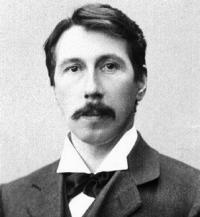
This month, I’m going to explore the life and music of Dutch composer Johan Wagenaar. Born in 1862 in Utrecht, Wagenaar’s parents were of different social strata: his father was an aristocrat, while his mother was of more humble origins. For this reason, Wagenaar’s parents never married and Wagenaar received his mother’s name as his family name. Wagenaar would eventually overcome the stigma attached to having unwed parents, and while he resented his parents never marrying, he was by no means neglected by his father.
As a child it was evident that Wagenaar had a talent for music, but he did not begin to receive a formal education in music until age 13 with private instruction in piano, organ, violin, theory, and composition. Upon graduation at 17 he moved to Berlin to study with an associate of Brahms and earned fame for his skill at organ performances.
Wagenaar spent most of his career as an educator and conductor. Upon his return to Utrecht, he became a teacher at the music school there in 1896. A dedicated teacher, Wagenaar became the school’s director in 1904 and received an appointment with the Utrecht Municipal Orchestra. Between 1919 and 1937, Wagenaar also served as director of the Royal Conservatory at the Hague. One of his students at the conservatory was his son, Bernard, who eventually emigrated to America where he worked as a composer, conductor, and teacher. Bernard played violin with the New York Philharmonic and taught composition classes at Juilliard.
As a composer Wagenaar is best remembered for his large-scale symphonic poems, full of wonderful melodies and with a lush orchestral sound. The music of Hector Berlioz had a modest influence on his style and orchestration, but a much more pronounced influence was his contemporary, Richard Strauss. Like Strauss’s orchestral works, Wagenaar’s often find their source in literature or fairy tales and are told on a grand scale full of contrasting episodes of calm and fury as he builds drama. This led to Wagenaar often being referred to as the “Dutch Richard Strauss.”
Please join me during the 9 o’clock hour on Tuesday mornings in February and March when I’ll be featuring some of Wagenaar’s music, including the symphonic poem Summer of Life, the Romantic Intermezzo, and the concert overtures Amphitrion and Le Cid.