Mozart and Musical Affect
Mozart and Musical Affect

Mozart and Musical Affect
By Pam DeVier
“If people could see into my heart … everything is cold for me—ice cold.”
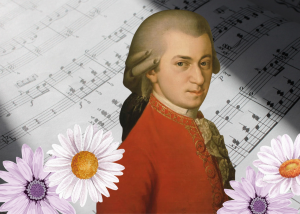
Mozart wrote those words in a letter to his wife Constanze in late 1790. Having traveled to Frankfurt to premier his Piano Concerto in D major (K. 537) for the coronation of Emperor Leopold II, he returned home none the richer and demoralized. On January 5, 1791, he entered his final Piano Concerto No. 27 in B-flat Major, a work decidedly opposed to the pomp and circumstance of his previous “Coronation” concerto, into his Catalog of My Works. Nine days later, he followed this with a collection of songs, including Sehnsucht nach dem Frühling (Longing for Spring), the tune of which is also the principal theme of the B-flat concerto’s finale. However, his popularity was at an all-time low, his financial difficulties had worsened, and he was fretting over his wife’s health. Writing in the dead of winter, Mozart was longing for spring and a renewal of his circumstances.
B-flat major is described as a key of “cheerful love, clear conscience, and hope – aspiration for a better world” in an important 18th century treatise that discusses how music, in particular different key signatures, can influence human moods and emotions. The relationship between key signatures and emotions, called musical affect, was part of the musical language for composers, performers, and audiences during the baroque and classical periods. Entire areas of study were dedicated to understanding this connection in order to enrich musical experiences. By the 20th century, with changes to instruments and tuning, musical affect all but disappeared from the vernacular. But when Mozart composed, his key signature choices were informed by musical affect, and we lose part of the meaning of his works without this perspective. Two centuries later, his final piano concerto, in its hopeful key of B-flat major, still holds the promise of spring for listeners today.