Heinrich Ignaz Franz Biber’s Mystery Sonatas: Scordatura and a Christmas Story by Pam DeVier
Heinrich Ignaz Franz Biber’s Mystery Sonatas: Scordatura and a Christmas Story by Pam DeVier

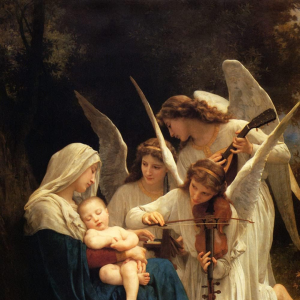 Bohemian-Austrian baroque composer, Heinrich Ignaz Franz Biber was a leading violin virtuoso of the 17th century. His set of astonishingly powerful and deeply emotional sonatas known as the Mystery or Rosary Sonatas survive in a single original manuscript with beautiful copper-plate engravings dating from the 1670s. They are the most programmatic works for violin before Vivaldi’s Four Seasons and, along with Bach’s unaccompanied music, are the most difficult works in the baroque violin repertoire. The 15 sonatas are organized into the same cycles as the meditations on the Rosary: five Joyful Mysteries, five Sorrowful Mysteries, and five Glorious Mysteries, plus a concluding Passacaglia.
Biber used a technique known as scordatura. Meaning “discord” in Italian, scordatura is a technique of intentionally mistuning or altering the tuning of the strings, in this case the violin, giving them a remarkable range of affects and emotions. Scordatura brings the violin into different ranges and creates a kaleidoscope of otherworldly overtones and sonic effects. Biber manipulates the violin’s tone color to allow for chords otherwise impossible with standard tuning. Through the progression of the sonatas, the alternate tunings present increasing levels of difficulties for the violinist to overcome, with the peak of difficulties in the Sorrowful Mysteries. In this way, the music is a literal representation of the life of Christ from birth to death. What Biber accomplishes is unique, fascinating, and breathtaking.
The Joyful Mysteries depict episodes from the Christmas story. In Sonata No. 1 The Annunciation, rapid showers of notes reflect Mary’s nervousness and anxiety and the fluttering of the angel’s wings. Illustrating the story of Mary’s visit to her cousin, Elizabeth, Sonata No. 2 The Visitation, dances with joy and light-heartedness. Ascending scales represent the baby leaping in his mother’s womb. Sonata No. 3 The Nativity, has a surprisingly dark opening, painting a solemn picture of a humble birth. Although these sonatas originate from a tradition of Marian devotion, one does not need to belong to any faith to experience their awe and beauty.
The Annunciation, the Visitation, and the Nativity from Biber’s Mystery Sonatas can be heard on A Journey through the Baroque, Tuesday, December 19 at 8:00am.