
Written by Fred Kormos
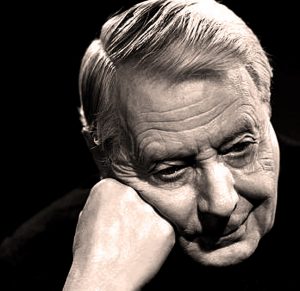
Charles Munch was one of the greatest French conductors of all time, but he wasn’t French through-and-through. He was born on September 26, 1891 in Strasbourg, the capital of the Alsace region. He began his musical career as a violinist; he was a professor of violin at Strasbourg Conservatory and played violin in several orchestras. Between 1926 and 1933, he served as concertmaster of the Gewandhaus Orchestra, Leipzig, under conductors Wilhelm Furtwängler and Bruno Walter.
He conducted an orchestra for the first time in Paris in 1941 and subsequently led orchestras all over Europe, making quite a few recordings along the way. But he’ll always be remembered for his tenure as Music Director of the Boston Symphony Orchestra, a post he held from 1949 to 1962. He and the Boston Symphony made many recordings for the RCA Victor label; several of their recordings of French works are still very highly regarded: Symphony No. 3 (the Organ Symphony) by Saint-Saëns, Symphonie fantastique by Berlioz, Daphnis et Chloé by Ravel, Debussy’s La Mer, Franck’s Le chasseur maudit, and Ravel’s Boléro and La valse, for example.
Munch was truly a master of French repertoire, but it’s sometimes overlooked that, having been born in Germany, he also had an affinity for German music, and he made several fine recordings of German works with his Boston orchestra. They recorded all six of Bach’s Brandenburg Concertos, three of Brahms’ symphonies, three of Mendelssohn’s, and seven of Beethoven’s, plus concertos by Bruch, Beethoven, and Mendelssohn, as well as music by Wagner, Schumann, and Richard Strauss.