The Nutcracker: The Eternal Dance
The Nutcracker: The Eternal Dance

Following the huge success of Tchaikovsky’s ballet The Sleeping Beauty, A. Vsevolozhsky, the director of Russia’s Imperial Theaters, decided that The Nutcracker, a story by E. T. A. Hoffmann, would be the perfect inspiration for a new work that would bring the same kind of acclaim. M.I. Petipa, the choreographer of Sleeping Beauty was hired and was asked to supply Tchaikovsky with the scenario. This he did – in much annoying detail:
“An empty stage. The moon shines into the dining room through the window. 8 bars of mysterious and delicate music. Clara quickly returns to look at her darling Nutcracker once more. 8 bars, still more mysterious music for her entrance. She goes up to the Nutcracker’s bed – a fantastic flame seems to be glowing there. 8 bars of fantastic and still more mysterious music. The clock strikes midnight. A pause in the music. A short tremolo… 5 bars to imitate mice scratching and another 4 bars for their squeaking…”
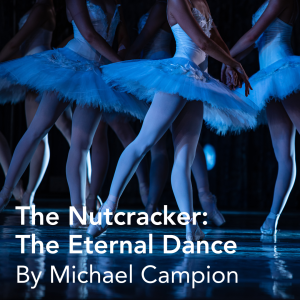 Tchaikovsky was understandably upset at being told how his music should sound. He seriously considered withdrawing from the project. But then, on a trip to Paris, he was introduced to the celesta. The unique sound of the keyboard instrument reminded him of one of Petipa’s instructions that the Sugar Plum Fairy’s music should sound like sprays of a fountain. Tchaikovsky immediately had one shipped to him and was now fully inspired to write the music for The Nutcracker, using this find as a starting point.
Work progressed slowly, but by March, 1892, Tchaikovsky was ready to introduce some of the music to the public. The now famous Nutcracker Suite, taken directly from the unfinished score of the complete ballet was an overwhelming success. But the fully realized production was another story. At its world premiere in December, 1892, the reviews were mixed. It is hard to imagine, yet by the time of Tchaikovsky’s death a year later, the ballet had only been performed four times and was nearly forgotten.
But there were those who refused to give up on the work, and by the early part of the 20th century, The Nutcracker had become an established tradition in Russia, Europe, and finally America. It is difficult now to imagine a time before The Nutcracker existed, and it will remain the Christmas tradition that is a delightful discovery for our children, and for the child in all of us.